A Shelter Visit That Became a Rescue Mission
Sam Olson expected her final year in Kent State University’s Vet Tech program to be busy, but she never expecte tiny abandoned kittens to become part of her education.
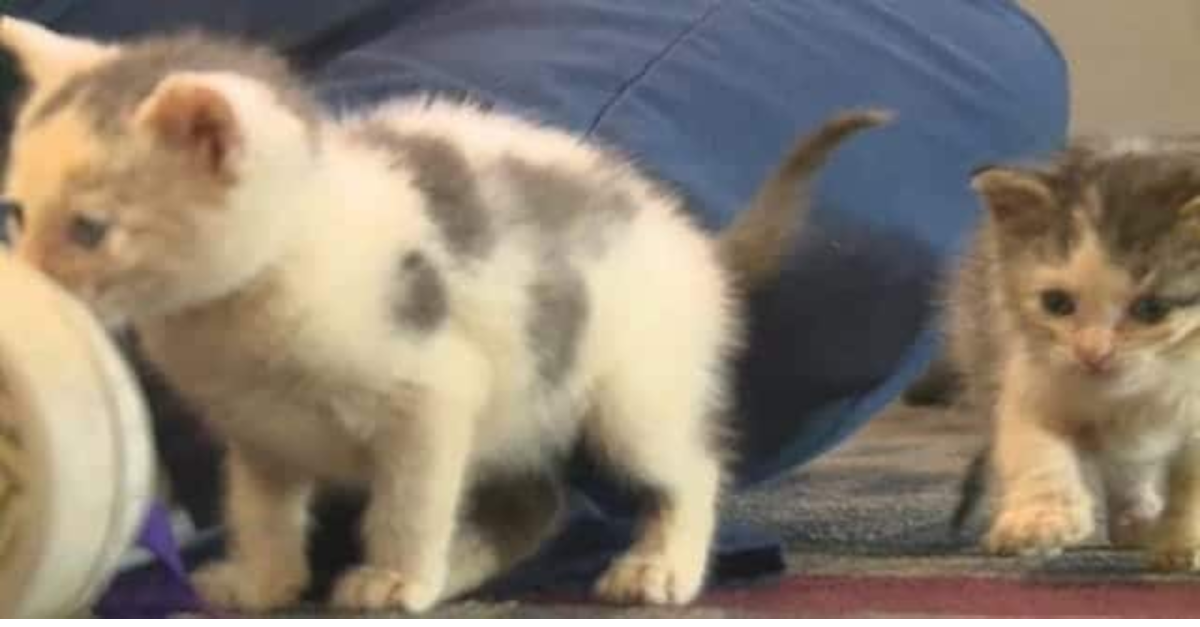
During a visit to a local animal shelter in Ohio, she noticed the kittens in desperate need of help. They were newborns, fragile and weak, with no mother to feed or protect them.
The shelter needed foster support, and Sam could not walk away.
“They were understaffed as far as fostering goes, so I volunteered,” she explained.
The Kittens Were So Weak They Could Barely Suckle
At first, caring for the kittens felt like a race against time.
They were so small and weak that even eating was difficult. Something as simple as getting them to suckle became a major victory.
“When they were small they were very, very weak,” Sam said. “Just getting them to suckle and eat was a very big deal.”
For newborn kittens without a mother, every feeding matters. Missing food, warmth, or care for too long can become dangerous quickly.
Sam knew these babies needed constant attention if they were going to survive.
Feeding Every Two Hours, Day and Night
For the first few weeks, Sam tube-fed the kittens every two hours.
That meant waking up through the night, preparing food, feeding them carefully, checking their condition, cleaning their space, and making sure they stayed warm.
Her schoolwork did not stop.
Her life did not become less busy.
But suddenly, her routine revolved around the tiny lives depending on her.
She washed their blankets twice a day, changed their litter box, fed them, monitored them, and gave them the kind of care they would have received from a mother if they had not been abandoned.
Her College Lessons Became Real Life
Sam’s Vet Tech training became more than classroom knowledge.
She had learned how to care for orphaned kittens, including how to calculate nutrition and caloric needs. Now, those lessons were no longer just formulas on paper.
They were helping her keep four newborn kittens alive.
“There’s a lot of formulas as far as their nutrition goes,” Sam explained. “You have to calculate what their caloric intake should be.”
For many students, classwork prepares them for the future.
For Sam, it became the reason the kittens had a chance.
From Fragile Babies to Growing Fighters
After four weeks of care, the kittens began to grow stronger.
The hardest days had passed. They were healthier, more active, and no longer as helpless as they had been in the beginning.
Sam still had plenty to do, but the progress made every sleepless night worth it.
The kittens who once struggled to eat were now growing into stronger little survivors.
Their story could have ended before it truly began, but patience, knowledge, and compassion changed their future.
A Lesson in Compassion Beyond the Classroom
Melissa Best, coordinator of the Vet Tech program, hoped Sam’s decision would inspire more students to help animals in need.
Sam was the first in the program to foster in this way, but her work showed how powerful hands-on care can be.
These kittens did not just give Sam experience.
They gave her a deeper reminder of why veterinary care matters: because behind every lesson, formula, and feeding schedule, there is a life waiting to be saved.