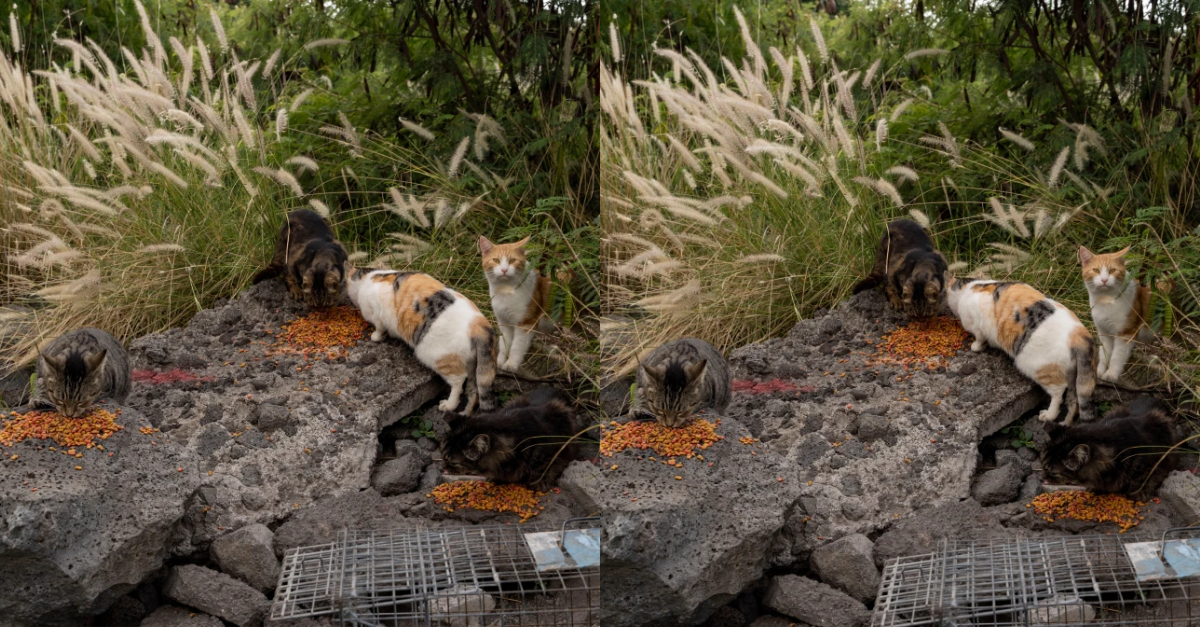
On Hawaii’s Big Island, a new law banning the feeding of feral animals on county property is creating a painful divide between wildlife protectors and cat lovers.
The law is set to take effect at the start of the new year. Its goal is to protect native Hawaiian species, including the endangered nene goose, from the impact of feral cats. Wildlife experts say cats can harm native animals directly by hunting them and indirectly by spreading disease through parasites such as toxoplasmosis.
But for people who have spent years feeding and caring for feral cats, the ban feels heartbreaking.
At the Kealakehe Transfer Station and Recycling Center near Kona, about 200 cats live around the dump. Every late afternoon, longtime feeder Liz Swan arrives with water and kibble. She has been feeding feral cats on the Big Island for 33 years and says she does not believe cats should be left to suffer in order to protect the nene.
To Swan and other cat advocates, the animals are not villains. Many are abandoned pets or the descendants of pets people failed to spay, neuter, or keep safe. Opponents of the ban worry that if feeding stops, hungry cats will not disappear. They may spread out, hunt more, or be fed secretly by people unwilling to watch them starve.
Officials and biologists see the issue differently.
Hawaii’s native wildlife evolved without mammalian predators, making birds and other species especially vulnerable. Conservation workers say feeding stations can draw native animals closer to danger, including roads and areas where cats gather. In one case, a male nene was struck and killed while crossing a road to reach a cat feeding station.
State wildlife biologist Raymond McGuire, who owns a cat himself, says he understands why people care for the animals. But as a Hawaiian conservationist, he believes feral cats do not belong in places where native species are fighting to survive.
The debate has become deeply emotional.
Big Island Mayor Kimo Alameda said he felt bad for the cats and understood why opponents were upset, but he allowed the measure to take effect after the county council passed it by a veto-proof vote. Violations can bring fines, though the mayor said he hopes police make enforcement a low priority.
For cultural practitioner Makaʻala Kaʻaumoana, feeding and trap-neuter-release programs are not enough because cats can still hunt. She believes the cats must be removed from sensitive areas.
For feeders like Swan, the thought of walking away from hungry animals is unbearable.
“I’m not going to let them starve,” she said.
The Big Island’s feral cat ban has become more than a local rule. It is now a painful question about responsibility: how to protect endangered native wildlife while also dealing humanely with thousands of cats who did not choose to be abandoned, born outside, or left to survive around dumps and roadsides.
