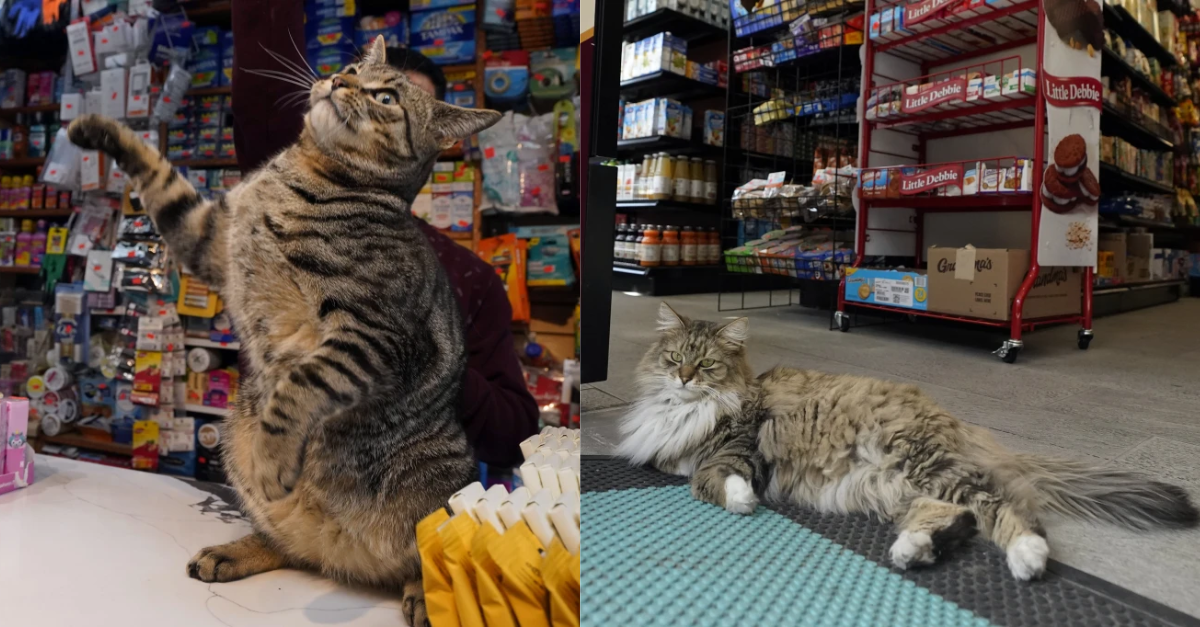
In New York City, bodega cats are more than store pets.
They are local celebrities, tiny security guards, unofficial greeters, and quiet companions tucked between shelves of snacks, canned goods, and household supplies. Customers stop to pet them. Store owners speak about them with pride. Online, some of them become viral stars.
But there is one problem.
Technically, many of them are not supposed to be there.
State rules generally bar animals from stores that sell food, which means bodega owners can face fines if inspectors find a cat living inside. The issue recently gained fresh attention after an online petition asked New York City to protect bodega cat owners from penalties, gathering more than 10,000 signatures.
Supporters say the cats are not a nuisance.
They are part of the city.
Many customers argue that bodega cats help keep away rodents and insects. Some shopkeepers say their cats do something even more powerful: they bring people in, create warmth, and turn ordinary corner stores into places with personality.
At one bodega in Greenpoint, Brooklyn, a gray-and-white cat named Mimi became a sensation after a customer posted a TikTok video of her. The clip was viewed more than 9 million times, turning Mimi into a neighborhood star.
For customer Sydney Miller, Mimi became more than a cute cat in a shop. She helped create a connection with Mimi’s caretaker, Asam Mohammad, a Yemeni immigrant still building his life in the United States.
In a city where people often pass each other quickly, bodega cats slow things down.
They give customers a reason to talk.
They make strangers smile.
They turn a quick errand into a small moment of connection.
Mimi is not the only feline with fans. Her kitten Lily has also become popular with customers, while another kitten, Lionel, now lives at a nearby bodega owned by the same family.
Lionel has become more than a shop cat. During Ramadan, he kept shopkeeper Ala Najl company while Najl was fasting. As Najl waited for the day’s fast to end, Lionel played tug-of-war with a prayer rug, offering a funny distraction from hunger and fatigue.
At another Greenpoint bodega, a cat named Reilly has become so beloved that one customer even tried to buy him. His owner, Salim Yafai, jokingly named a high price. The customer countered with a lower offer.
Yafai refused.
Because to many bodega owners, these cats are not inventory.
They are family.
That is what makes the debate so complicated. Food safety rules exist for a reason. But for many New Yorkers, bodega cats represent something that regulations cannot fully measure: comfort, character, humor, and community.
They may be on the wrong side of the law.
But in the hearts of New Yorkers, bodega cats are right where they belong.
