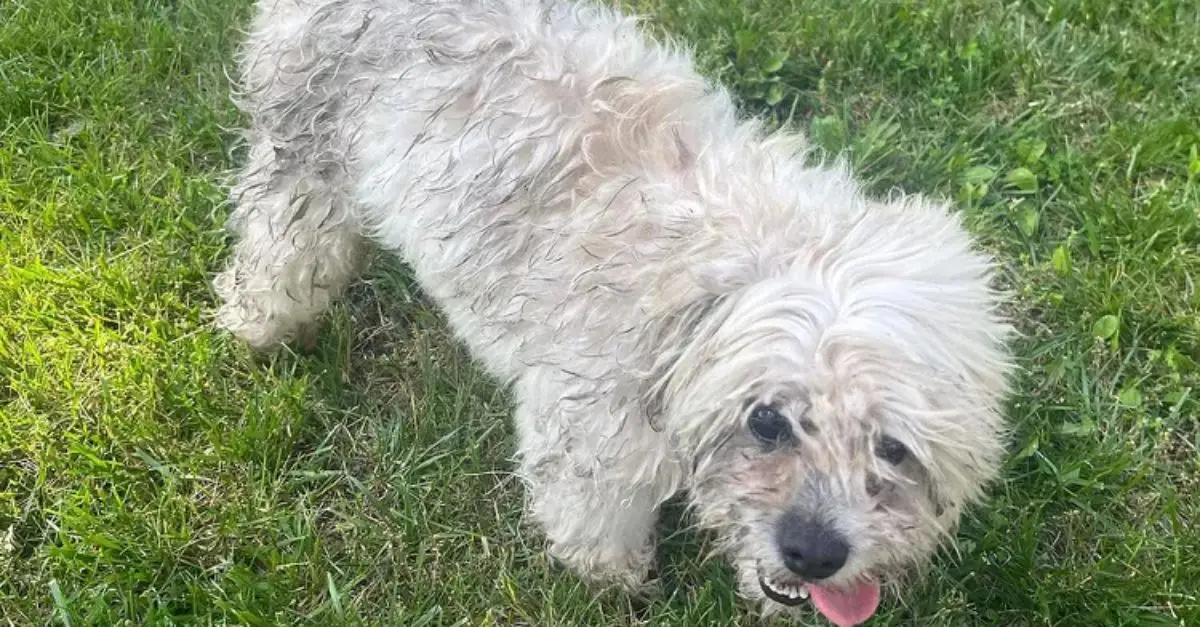
A Lost Dog Who Could Not Hear Help Coming
On May 19, in Sturgeon, Missouri, a small Shih Tzu named Teddy wandered away and ended up in a neighbor’s yard.
He was not aggressive. He was not attacking anyone. He was not a threat in the way many people would imagine when police are called.
Teddy was blind.
He was deaf.
He was a vulnerable dog who could not see where he was going and could not hear people approaching him. If someone called his name, he could not respond. If someone tried to guide him with sound, he would not understand.
He was simply lost.
But within minutes of police arriving, Teddy was dead.
A Call Meant to Get Help
The homeowner who found Teddy in her yard contacted the city because she wanted assistance.
She hoped someone could help locate the dog’s owner or get him somewhere safe. According to her account, Teddy appeared friendly and calm. She did not describe him as a dangerous animal.
But the situation changed quickly after an officer arrived.
Body camera footage later showed how fast the encounter unfolded. Instead of ending with Teddy being safely captured, the response ended with lethal force.
For Teddy’s owner, Nicholas Hunter, the news was devastating.
The City’s Explanation Sparked Anger
After the shooting, the city of Sturgeon defended the officer’s actions.
Officials described Teddy as injured, sick, abandoned, and potentially dangerous. They stated that the officer acted within his authority based on the information available at the time.
But that explanation did not match what Teddy’s owner and the reporting homeowner said.
Hunter said Teddy was a gentle dog with serious disabilities. The homeowner said the dog seemed docile and not aggressive. Many people questioned how a blind and deaf Shih Tzu could have been treated as a threat so quickly.
The public reaction was swift.
People wanted answers.
They wanted accountability.
And they wanted to know why a lost disabled dog was not handled with more patience.
A Family Lost More Than a Pet
For Nicholas Hunter, Teddy was not just a dog in a police report.
He was family.
The loss was made even more painful by the way it happened. Teddy did not die peacefully after old age or illness. He was shot after wandering into the wrong yard, unable to hear commands, unable to see clearly, and unable to understand the danger around him.
For a blind and deaf dog, the world was already difficult.
He depended on people to be patient.
He depended on humans to recognize his limits.
In his final moments, that patience never came.
A Community Demands Change
Teddy’s death caused outrage far beyond Sturgeon.
Many people questioned the officer’s decision-making and the city’s public response. Others called for better training for law enforcement when dealing with lost pets, disabled animals, and non-aggressive dogs.
The city later said officers would receive more training on animal-related calls.
But for Teddy’s grieving owner, no training can bring him back.
What remains is the question at the center of the tragedy: could this have ended differently if Teddy had been treated as a scared, disabled pet instead of a threat?
A Tragedy That Should Not Be Forgotten
Teddy’s story is heartbreaking because he was one of the most vulnerable animals possible.
A small dog. Blind. Deaf. Lost. Unable to understand what was happening around him.
He needed help, not fear. He needed patience, not force. He needed someone to slow down long enough to see that he was not dangerous — he was helpless.
His death is a painful reminder that animal-related calls require care, training, and restraint. A lost pet should not be met with a response that turns a simple rescue into a family’s worst day.
Teddy wandered into a neighbor’s yard.
He should have been brought home.
Instead, his owner was left grieving a gentle dog whose disabilities made him vulnerable — and whose final moments have now become a call for accountability.